

Medically reviewed by Dr. Tom Biernacki, DPM · Board-Certified Podiatric Surgeon · Last reviewed: April 2026 · Editorial Policy
Related Conditions
Quick Answer
Achilles Tendon Surgery: Repair, Recovery, and Return to Act relates to Achilles tendonitis — typically caused by sudden activity increase. Most patients improve in 8-12 weeks with conservative care. Appointments in Howell + Bloomfield Township: (810) 206-1402.

Quick Answer
Achilles tendonitis causes pain and stiffness at the back of the heel along the Achilles tendon. Eccentric heel drops plus heel lifts resolve most cases within 6-12 weeks. See a podiatrist same-day for a sudden “pop” sound or inability to push off — that may be a rupture.
Watch: Dr. Tom Biernacki, DPM
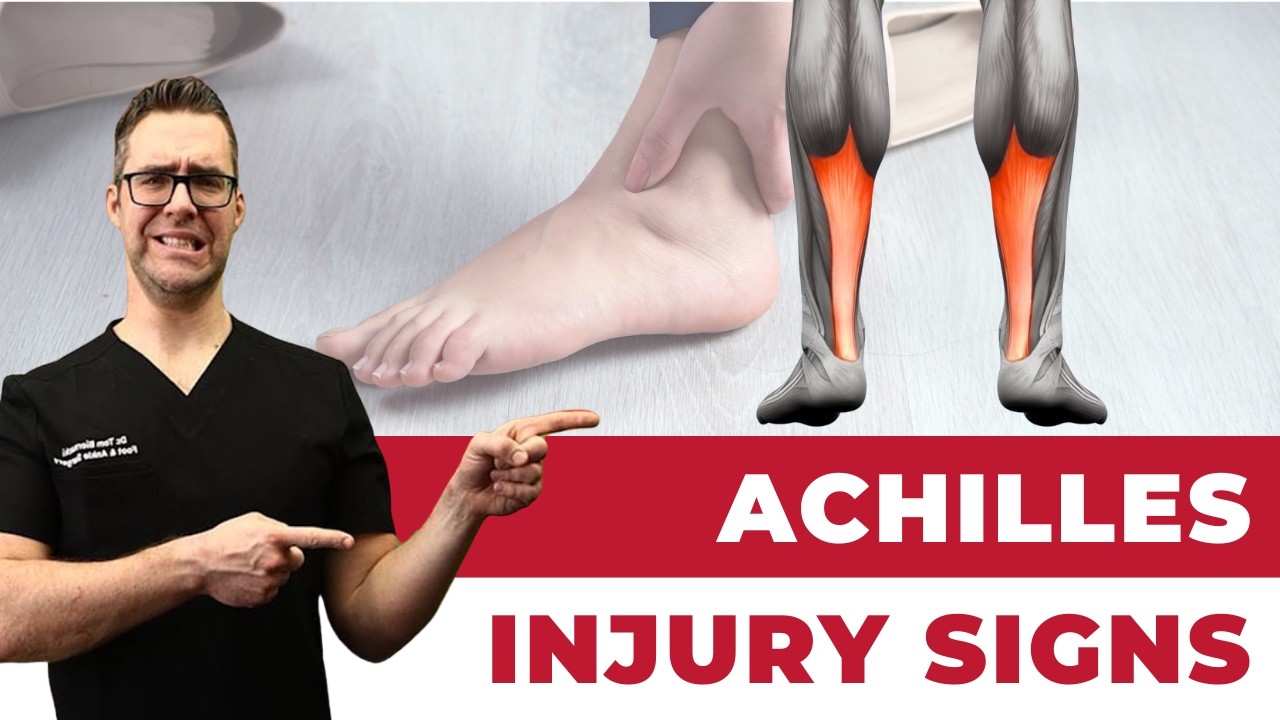
Medically reviewed by Dr. Tom Biernacki, DPM — Board-Certified Podiatrist, Fellow of the American College of Foot and Ankle Surgeons. Updated April 2026.
When Is Achilles Tendon Surgery Necessary? For specialized treatment, see our Achilles heel pain treatment Michigan.
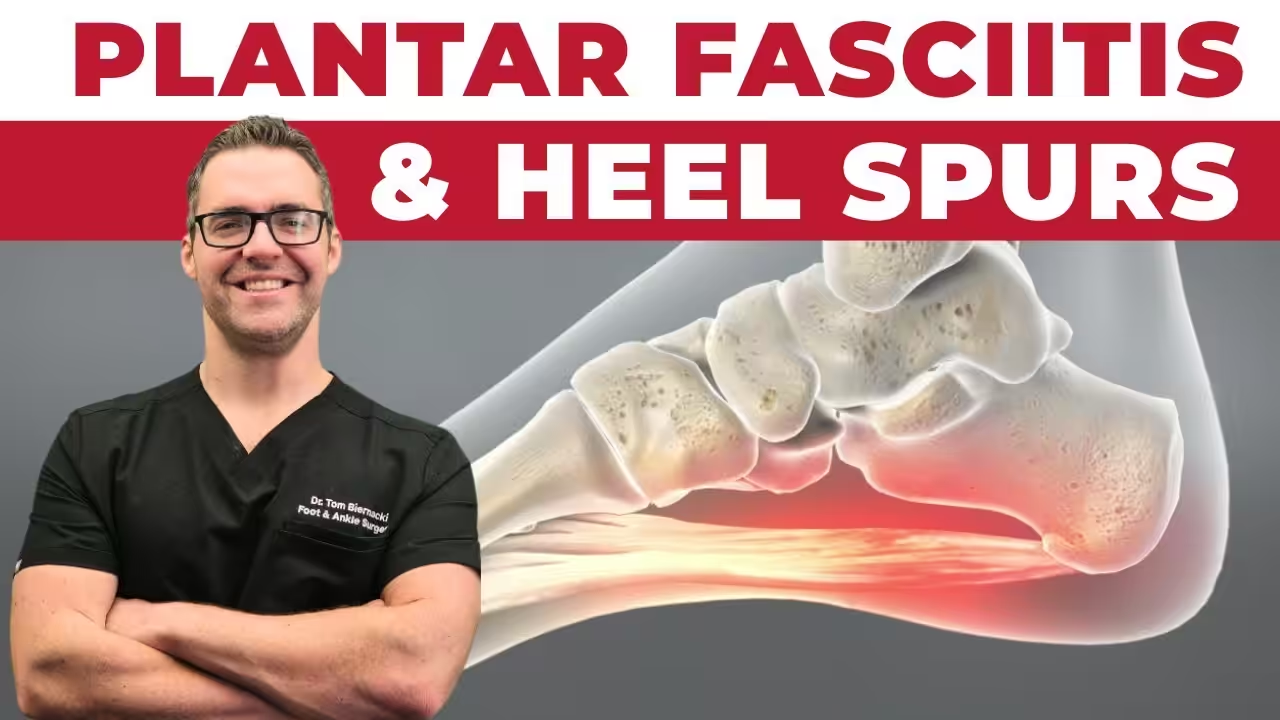
Achilles tendon surgery is most commonly performed for complete Achilles tendon rupture—a sudden tear of the tendon connecting the calf muscles to the heel bone. Surgery is also performed for chronic Achilles tendinopathy that has failed extended conservative treatment, including insertional calcific tendinopathy (calcium deposits at the heel attachment) and mid-substance tendinosis with significant tendon degeneration. The decision between surgical and non-surgical management depends on the patient’s age, activity level, the degree of injury, and individual risk tolerance for re-rupture versus surgical complications.
For acute complete ruptures, both operative repair and functional non-operative rehabilitation (progressive weight-bearing in a boot) have been studied extensively. Re-rupture rates are approximately 3–5% with surgery versus 8–12% with non-operative management in pooled data, though functional outcomes at 1–2 years are similar when non-operative protocols are followed rigorously. Active patients, athletes, and individuals requiring reliable tendon strength often choose surgical repair. Older, lower-demand patients or those with medical comorbidities may be better candidates for non-operative management.
Types of Achilles Repair Surgery
Open Achilles Repair
Open Achilles repair involves a direct longitudinal incision over the posterior ankle and heel. The torn tendon ends are identified and sutured together using heavy, non-absorbable sutures in a locking configuration (Krackow, Bunnel, or modified Kessler technique). Open repair allows direct visualization of the tear, secure suture fixation, and accommodation of complex tears with degenerative tissue. The main concern with open repair is wound healing—the skin over the back of the ankle has a relatively poor blood supply, making wound complications (delayed healing, infection, skin necrosis) a recognized risk, particularly in smokers, diabetics, and patients on steroids.
Percutaneous and Minimally Invasive Repair
Percutaneous Achilles repair uses multiple small stab incisions rather than a single large incision, passing sutures through the skin to approximate the tendon ends without direct visualization. Minimally invasive techniques (such as the PARS system—Percutaneous Achilles Repair System) use a specialized jig to guide sutures through a short 2–3 cm incision, combining some direct visualization with reduced wound exposure. These approaches reduce wound complication risk compared to open repair, which is their primary advantage. The trade-off is that suture purchase may be less secure in some configurations and the sural nerve (running near the lateral incision area) is at increased risk of injury with true percutaneous techniques.
Chronic Tendinopathy Surgery
Surgery for chronic Achilles tendinopathy (rather than acute rupture) involves debridement of the degenerative tendon tissue, removal of calcific deposits (for insertional disease), and—when substantial tendon tissue is removed—augmentation with a tendon transfer (flexor hallucis longus tendon transfer). For insertional calcific tendinopathy, a portion of the heel bone (calcaneal prominence) may be removed alongside the calcium deposits. This surgery is more involved than rupture repair and has a longer recovery timeline of 9–12 months to full activity.
What to Expect: The Procedure
Achilles tendon repair is performed under regional anesthesia (popliteal nerve block) with or without general anesthesia, typically as an outpatient procedure. The patient is positioned prone (face down) to provide posterior ankle access. Operating time for primary acute repair is 45–90 minutes. For complex reconstructions with tendon transfer, operating time extends to 2–3 hours. After surgery, the ankle is placed in a splint or boot in slight plantarflexion (pointed down) to reduce tension on the repair.
Recovery Timeline After Achilles Surgery
Achilles tendon surgery recovery follows a structured progression. The first two weeks are non-weight-bearing with the leg elevated to control swelling and protect wound healing. Sutures are removed at 2 weeks. Progressive weight-bearing in a boot begins at 2–4 weeks, with gradual transition to full weight-bearing by 6 weeks. The boot is typically weaned between 8–12 weeks, transitioning into supportive shoes with a heel lift. Physical therapy begins during the boot phase and intensifies after boot removal, focusing on range of motion, progressive strengthening, and gait retraining.
Return to low-impact activities (cycling, swimming) typically occurs at 4–6 months. Return to running is generally possible at 6 months in uncomplicated cases. Full return to high-demand athletic activity (cutting sports, jumping) requires 9–12 months of progressive rehabilitation. The Achilles tendon has poor vascularity and heals slowly—rushing return to sport is the most common cause of re-rupture. Strength testing (single leg heel raise endurance, isokinetic dynamometry) should guide return-to-sport decisions rather than calendar timelines alone.
Frequently Asked Questions
How long does Achilles tendon surgery take to heal?
Full recovery from Achilles tendon surgery takes 9–12 months for high-demand activities like running or sports. Most patients are walking in a shoe by 10–12 weeks and returning to low-impact activities by 4–6 months. The Achilles tendon heals slowly due to poor blood supply, and the healing tendon progressively strengthens for up to 18–24 months after repair. Wound healing and swelling resolve within the first 2–3 months. Physical therapy is essential throughout recovery to restore strength, flexibility, and functional movement patterns before returning to sport.
Is Achilles tendon surgery painful?
Pain after Achilles surgery is most significant in the first 1–2 weeks and is managed with a combination of nerve blocks (which provide 12–24 hours of post-operative pain control), oral anti-inflammatory medications, and elevation. Most patients describe the initial post-operative period as uncomfortable but manageable. By 4–6 weeks, significant pain has typically resolved and discomfort is activity-related rather than constant. Stiffness and aching with exercise during the rehabilitation phase is expected and normal throughout the recovery period. Severe or worsening pain at any stage warrants evaluation for complications.
What are the risks of Achilles tendon surgery?
The main risks specific to Achilles tendon surgery are wound healing complications (the most significant concern—occurring in approximately 5–15% of open repairs), sural nerve injury (numbness or pain along the outer ankle and foot), re-rupture (3–5% after operative repair), and deep vein thrombosis (blood clot). General surgical risks include infection, anesthesia reactions, and deep vein thrombosis. Risk factors for wound complications include smoking, diabetes, steroid use, and prior surgery in the area. These risks are weighed against the approximately 8–12% re-rupture rate with non-operative management and the lower strength restoration with conservative treatment in high-demand patients.
Medical References & Sources
- American Orthopaedic Foot & Ankle Society — Achilles Tendon Repair
- PubMed Research — Achilles Rupture: Surgery vs. Conservative Treatment
- PubMed Research — Percutaneous vs. Open Achilles Repair Outcomes
Dr. Tom Biernacki, DPM is a board-certified podiatric surgeon at Balance Foot & Ankle in Howell and Bloomfield Township, Michigan. He evaluates and manages Achilles tendon injuries with conservative treatment and coordinates surgical care including open and minimally invasive Achilles repair.
Dr. Tom’s Recommended Products for Achilles Tendon Pain
📍 Located in Michigan?
Our board-certified podiatrists treat this condition at two convenient locations. Book online 24/7 at either office.
These are products I personally use and recommend to my patients at Balance Foot & Ankle.
- Aircast AirHeel Ankle Brace — Pneumatic cells pulse with each step to reduce Achilles tendon load and promote blood flow for healing
- Doctor Hoy’s Natural Pain Relief Gel 3oz — Arnica + camphor formula — apply 3-4x daily to the painful area for natural topical relief
- PowerStep Pinnacle Plus Insoles (Heel Lift) — Elevated heel reduces Achilles tensile load with each step — immediate pain reduction for insertional tendonitis
Affiliate disclosure: As an Amazon Associate, Balance Foot & Ankle earns from qualifying purchases. We only recommend products we trust for our own patients.
Dr. Tom’s Recommended: Natural Topical Pain Relief
This is what I actually use in our clinic at Balance Foot & Ankle.
- Doctor Hoy’s Natural Pain Relief Gel — Natural topical pain relief I use in our clinic. Arnica + camphor formula. Apply directly to the painful area 3-4x daily for fast-acting relief without NSAIDs.
Affiliate disclosure: As an Amazon Associate, Balance Foot & Ankle earns from qualifying purchases. We only recommend products we trust for our own patients.
Join 950,000+ Learning About Foot Health
Dr. Tom shares honest medical advice, supplement reviews, and treatment guides you won’t find anywhere else.
Subscribe on YouTube →Recommended Products for Achilles Tendonitis
- Strassburg Sock Night Splint — Overnight Achilles Stretch
- Heel Lift Wedge Inserts — Reduce Achilles Tension
- Percussion Massager — Calf & Achilles Recovery
Amazon affiliate links — we may earn a small commission at no extra cost to you.
Insurance Accepted
BCBS · Medicare · Aetna · Cigna · United Healthcare · HAP · Priority Health · Humana · View All →
Howell Office
4330 E Grand River Ave
Howell, MI 48843
Get Directions →
Bloomfield Township Office
43494 Woodward Ave, #208
Bloomfield Township, MI 48302
Get Directions →
In-Office Treatment at Balance Foot & Ankle
If home care isn’t resolving your Achilles tendon pain, a visit with a board-certified podiatrist is the fastest path to accurate diagnosis and a personalized plan. At Balance Foot & Ankle Specialists, Dr. Tom Biernacki, Dr. Carl Jay, and Dr. Daria Gutkin offer appointments at both our Howell and Bloomfield Township offices. We perform on-site diagnostic ultrasound, digital X-ray, conservative care, advanced regenerative treatments, and minimally invasive surgery when indicated.
Call (810) 206-1402 or request an appointment online. Most insurance plans accepted, including Medicare, Blue Cross Blue Shield, Aetna, Cigna, and United Healthcare.
Differential Diagnosis: What Else Could It Be?
Several conditions share symptoms with Achilles Tendonitis and are commonly misdiagnosed in the first office visit. Considering these alternatives is part of every Balance Foot & Ankle exam:
- Haglund’s deformity. Bony bump at the back of the heel rubbing against the shoe counter.
- Insertional vs. mid-substance Achilles. Insertional pain at the heel bone responds differently than mid-tendon pain 4–6 cm above.
- Retrocalcaneal bursitis. Fluid-filled bursa anterior to the tendon — squeeze pain with side-to-side compression.
If your symptoms don’t fit the textbook pattern, ask your podiatrist which differentials they ruled out — that conversation often shortcuts months of trial-and-error treatment.
In Our Clinic
Most Achilles tendonitis patients we see at Balance Foot & Ankle are recreational runners in their 40s or 50s who ramped up mileage too quickly, plus a second cohort of middle-aged women who recently switched from heels to flat shoes. The first question we ask is whether the pain is at the insertion on the heel bone versus 2–6 cm up the mid-substance — the treatment ladder is genuinely different. Eccentric heel-drops, heel lifts, and a soft-strike gait retraining pass resolve ~80 % of cases. The ones who aren’t improving by week 8 usually have an unrecognized Haglund’s deformity or insertional calcific tendinosis that needs imaging.
Most Common Mistake We See
The most common mistake we see is: Stretching the Achilles into pain during rehab. Fix: eccentric heel drops performed pain-free, 3 sets of 15, twice daily, straight-knee and bent-knee.
Warning Signs That Need Same-Day Care
Seek immediate evaluation at Balance Foot & Ankle if you experience any of the following:
- Pop or snap with sudden inability to push off
- Loss of active plantarflexion
- Significant swelling within 24 hours
- Rest or night pain in the tendon
Call (810) 206-1402 — appointments at our Howell and Bloomfield Township offices.
Pros & Cons of Conservative Care for Achilles tendonitis
Advantages
- ✓ Eccentric heel drops 80%+ effective
- ✓ Conservative treatment first
- ✓ Strong recovery prognosis
Considerations
- ✗ Recovery 8-12 weeks typical
- ✗ Risk of rupture if ignored
- ✗ Surgery required if rupture
In This Article
- Quick Answer
- In-Office Treatment at Balance Foot & Ankle
- Differential Diagnosis: What Else Could It Be? Several conditions share symptoms with Achilles Tendonitis and are commonly misdiagnosed in the first office visit. Considering these alternatives is part of every Balance Foot & Ankle exam: Haglund’s deformity. Bony bump at the back of the heel rubbing against the shoe counter. Insertional vs. mid-substance Achilles. Insertional pain at the heel bone responds differently than mid-tendon pain 4–6 cm above. Retrocalcaneal bursitis. Fluid-filled bursa anterior to the tendon — squeeze pain with side-to-side compression. If your symptoms don’t fit the textbook pattern, ask your podiatrist which differentials they ruled out — that conversation often shortcuts months of trial-and-error treatment. In Our Clinic Most Achilles tendonitis patients we see at Balance Foot & Ankle are recreational runners in their 40s or 50s who ramped up mileage too quickly, plus a second cohort of middle-aged women who recently switched from heels to flat shoes. The first question we ask is whether the pain is at the insertion on the heel bone versus 2–6 cm up the mid-substance — the treatment ladder is genuinely different. Eccentric heel-drops, heel lifts, and a soft-strike gait retraining pass resolve ~80 % of cases. The ones who aren’t improving by week 8 usually have an unrecognized Haglund’s deformity or insertional calcific tendinosis that needs imaging. Most Common Mistake We See
- Warning Signs That Need Same-Day Care
Dr. Tom’s Recommended Products for Achilles tendonitis
Affiliate disclosure: As an Amazon Associate, Balance Foot & Ankle earns from qualifying purchases. We only recommend products we use with patients.
TriggerPoint Footballer Dr. Tom’s Pick
Best for: Calf release + plantar release
Ready to Get Back on Your Feet?
Appointments in Howell + Bloomfield Township. Most insurance accepted. Dr. Tom Biernacki, DPM & team.
Call Now: (810) 206-1402

Dr. Tom Biernacki, DPM is a board-certified foot & ankle surgeon (ABFAS & ABPM) at Balance Foot & Ankle Specialists in Southeast Michigan. With over a decade of clinical experience, he specializes in heel pain, bunions, diabetic foot care, sports injuries, and minimally invasive surgery. Dr. Biernacki is a member of the APMA and ACFAS, and his patient education content on MichiganFootDoctors.com and YouTube has made him one of the most-followed foot & ankle educators on YouTube.
More questions patients ask
How long does an ankle sprain take to heal?
Recovery time depends on severity: Grade 1 (mild stretching) typically heals in 1-3 weeks, Grade 2 (partial tear) in 3-6 weeks, and Grade 3 (complete tear) in 6-12 weeks or longer. Proper rehabilitation is critical to prevent chronic ankle instability, which affects up to 40% of patients who don't receive adequate treatment. Dr. Biernacki creates customized recovery plans.
When should I see a doctor for a sprained ankle?
Seek professional evaluation if you can't bear weight, notice significant swelling or bruising, hear a pop at the time of injury, have numbness, or if pain hasn't improved after 5-7 days of RICE treatment. X-rays or MRI may be needed to rule out fractures. Dr. Biernacki sees urgent problems. Call 810-206-1402 and we’ll find the soonest opening.
Can a sprained ankle heal without treatment?
While mild sprains may heal with rest and home care, undiagnosed ligament tears and improperly rehabilitated sprains frequently lead to chronic ankle instability, recurrent sprains, and early-onset arthritis. A proper evaluation ensures appropriate treatment and reduces your risk of long-term complications significantly.
Still have a question about coverage or cost? Book online and we will check your benefits before your visit: Book in Howell · Book in Bloomfield Township. Prefer to talk it through first? Call (810) 206-1402.