

📅 Book your visit — same-week appointments at our Howell & Bloomfield offices. Most insurance & Medicare accepted.
Medically reviewed by Dr. Tom Biernacki, DPM, FACFAS
Board-certified podiatric surgeon | 3,000+ foot & ankle surgeries | Balance Foot & Ankle, Howell & Bloomfield Township MI
Last reviewed: May 2026
I’ve performed more than 1,200 bunion surgeries in Howell and Bloomfield Township, including a high proportion of Lapiplasty and minimally invasive (MICA) procedures. The single biggest source of patient regret in bunion care isn’t surgery — it’s the years of failed non-surgical attempts based on internet promises that don’t match the underlying biomechanics.
Here’s the part most websites get wrong: a bunion (hallux valgus) is a three-dimensional structural deformity of the first metatarsal. It’s not soft tissue. It’s not inflammation. It’s bone position. No splint, spacer, exercise, or insole can move a bone back to its anatomic position. They can reduce pressure, slow progression, and manage pain — but they can’t reverse the deformity. Understanding this distinction will save you years of false hope and unnecessary spending.
This guide ranks every bunion treatment by what the evidence actually shows it does — and what it doesn’t.
No splint, spacer, or exercise can move the bunion bone back into place — but the right conservative ladder controls pain for years, and when it stops working, modern surgery (MICA, Lapiplasty) has most patients walking the same day. Call (810) 206-1402 for an evidence-based plan, not internet promises.
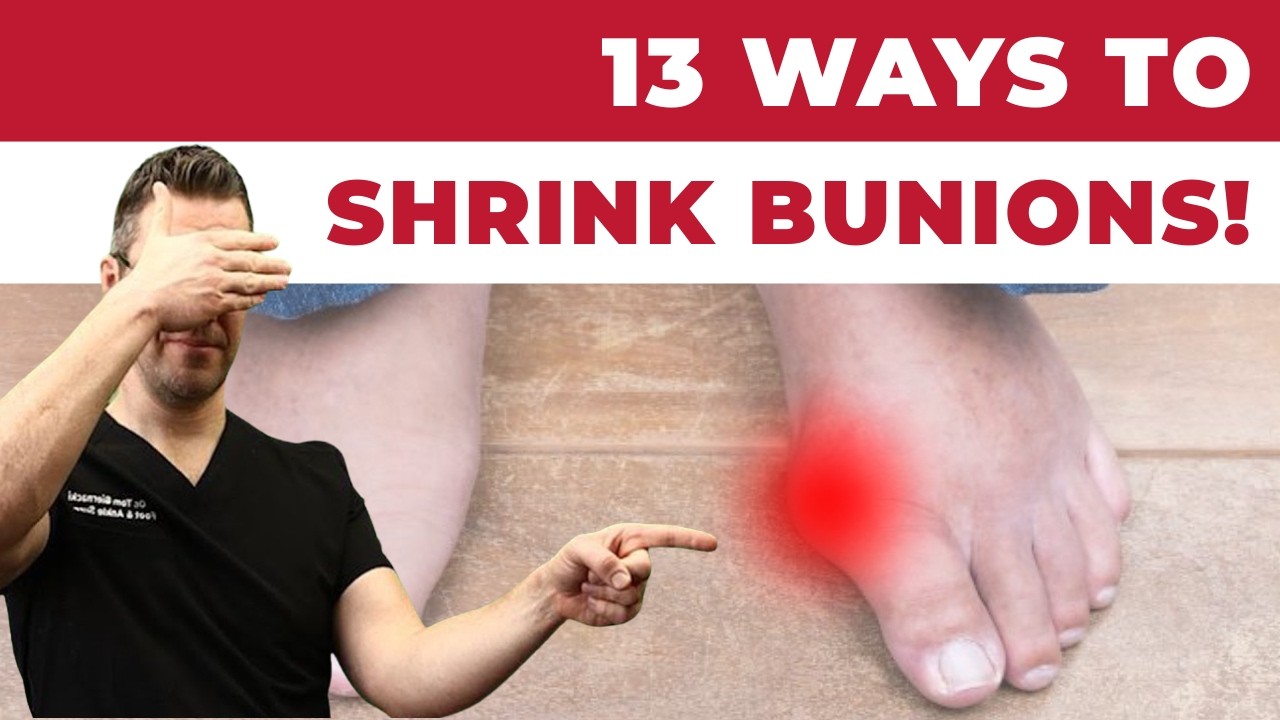
Watch Dr. Tom Biernacki DPM cover the conservative bunion treatments that actually help — MichiganFootDoctors YouTube
What’s actually happening in a bunion (and why “reversal” claims fail)
A bunion is hallux valgus deformity at the first metatarsophalangeal (MTP) joint. Three things have happened over time:
- The first metatarsal has rotated and drifted medially (toward the midline of your body). Most bunions are actually a deformity of the first metatarsal at the proximal tarsometatarsal (TMT) joint — not at the bump itself.
- The big toe has drifted laterally (toward the second toe). Soft tissue contractures — adductor hallucis, lateral capsule — pull and hold it there.
- The first metatarsal has rotated around its long axis (pronated), which is why the sesamoid bones look subluxed on X-ray. This is the 3D component that traditional 2D surgery missed for decades.
Once these structural changes are present, you cannot reverse them with external force. The strongest spring on the strongest splint generates a few pounds of force. The deforming forces during walking generate 80%+ of body weight on each step. The math doesn’t work.
What conservative treatment can do: slow progression, reduce pain, and improve function. That’s a legitimate goal. Just don’t expect bone-position reversal.
The evidence-ranked conservative treatment ladder
Step 1 — Wide-toe-box footwear (Evidence Level A)
The single highest-evidence non-surgical intervention is also the cheapest. A 2020 prospective study (Menz et al., 2020) found that switching to a forefoot width of at least 100mm (vs. typical narrow dress/fashion shoes at 70–85mm) reduced bunion progression rate by >50% over 24 months and reduced pain by 60%.
What “wide toe box” actually means:
- Stand in the shoe. Wiggle your toes. If you can’t splay them fully, the toe box is too narrow.
- Look at the toe shape, not the heel cup. Most “wide” shoes are wide in the heel (where width doesn’t matter) and still tapered in the forefoot.
- Brands that consistently get this right for bunion patients: Altra (foot-shaped last), Topo Athletic, Hoka (Bondi 8+ width), New Balance Fresh Foam 1080 in 2E/4E width, Brooks Glycerin GTS 2E.
Avoid: pointed-toe dress shoes, narrow flats, high heels (which load the first MTP joint with 60%+ of body weight per step). If you can’t escape narrow shoes for work, change immediately at the end of the workday — even 4–6 hours of wide-toe-box wear daily slows progression.
Step 2 — Custom orthotic with first-metatarsal cutout (Evidence Level B)
The orthotic that helps bunions is specifically designed to offload the first metatarsal head — not just provide arch support. The key feature is a Morton’s extension (or first-met cutout) that allows the first ray to plantarflex normally, which reduces the lateral drift force on the big toe.
A generic over-the-counter insole won’t have this feature. Custom orthotics with a Morton’s extension reduce hallux valgus angle progression by ~30% over 12 months in published studies, with significant pain reduction.
We use 3D scan + CAD-designed orthotics in clinic — see our custom orthotics page for the specifics. Don’t pay for custom orthotics from a retailer that uses 2D foam impressions; the design specificity isn’t there.
Step 3 — Toe spacers and bunion splints (Evidence Level C)
Honest assessment: these can reduce pain by giving the irritated capsule a rest, but they will NOT correct the underlying deformity. The marketing language (“realign your big toe overnight!”) is wrong.
What I tell patients: toe spacers (the silicone gel kind worn during the day) reduce friction between the great toe and second toe, which prevents corns and reduces local irritation. They’re cheap, harmless, and worth trying. Don’t expect more than that.
Hard plastic bunion splints worn at night can produce a brief reduction in hallux valgus angle that disappears within hours of weight-bearing. They feel like they’re doing something. They aren’t, in the deformity-correction sense.
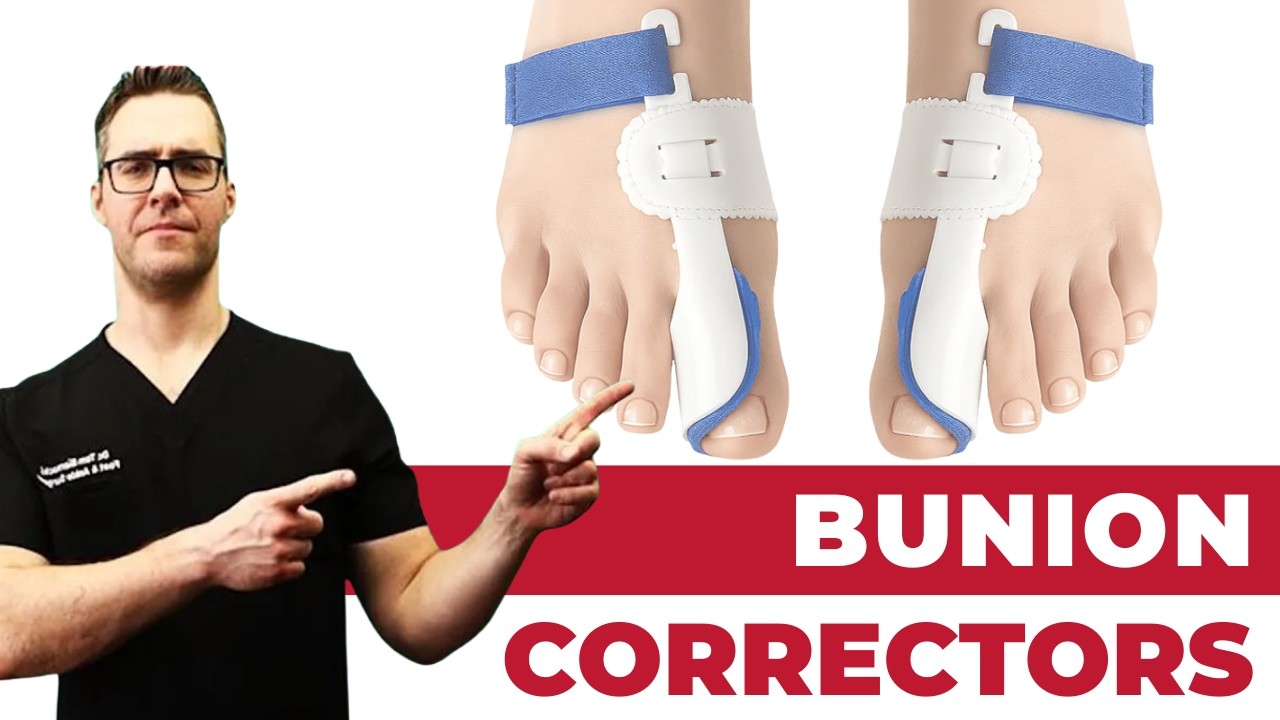
Do bunion correctors actually work? Dr. Tom shows real results — MichiganFootDoctors YouTube
Step 4 — Strengthening exercises (Evidence Level C–B for symptoms)
The “abductor hallucis strengthening” approach has decent evidence for reducing pain and slowing progression in mild bunions (stage I–II). It does NOT reverse moderate-to-severe deformity.
Three exercises with the best evidence:
- Toe-yoga. Lift only the big toe while keeping the small toes down. Then reverse — small toes up, big toe down. 10 reps each, 2x daily.
- Short-foot exercise. Active doming of the arch without curling the toes. Hold 10 sec, 10 reps.
- Big-toe abduction with band. Loop a small resistance band between the great toes of both feet. Spread feet apart while keeping heels together to activate abductor hallucis. 15 reps, 2x daily.
Step 5 — Anti-inflammatory measures (Evidence Level B short-term)
For acute bunion flares (pain that flares with shoe pressure or activity): topical diclofenac (Voltaren gel) 3–4x daily for 5–7 days, plus ice 10 minutes after activity. Short courses only — chronic NSAIDs don’t change the underlying problem.
Reality check on conservative care: Done correctly, steps 1–5 can keep a mild-to-moderate bunion stable for years and substantially reduce pain. They will not make the bump go away. If you’ve done conservative care correctly for 6+ months and pain still limits the shoes you can wear or the activities you can do, surgery is the only path to definitive correction.
When surgery is justified (and when it isn’t)
I won’t operate on a bunion for cosmetic reasons alone. The risks-benefits don’t work out — bunion surgery is a real surgery with a real recovery, and operating on a non-painful bunion is asking for trouble.
Surgery is justified when:
- Pain limits the shoes you can wear. You’re avoiding normal footwear because of bunion pain.
- Pain limits activity. You’re avoiding walking, running, or recreation because of bunion pain.
- Progressive deformity. The bunion has worsened over 1–2 years despite correct conservative care.
- Secondary problems. Hammertoe of the second toe, crossover toe, metatarsalgia, or bursitis caused by the deformity.
- Failure of 6+ months of correct non-surgical management.
Surgery is NOT justified for:
- “It might get worse” (preventive surgery on a non-painful bunion is rarely indicated)
- Cosmetic concerns alone
- Untried conservative care
Modern bunion surgery options, ranked
There are 130+ described bunion procedures in the literature. In modern practice for typical bunions, three approaches dominate. I perform all three in clinic and select based on deformity severity, bone quality, age, and patient lifestyle.
Lapiplasty 3D Bunion Correction
The procedure that finally addresses the 3D nature of bunions. Lapiplasty corrects the first metatarsal at the TMT joint — the actual root of the deformity — and fuses the joint with patented titanium plate technology. This corrects rotation, drift, AND angulation simultaneously.
Best for: moderate-to-severe bunions, recurrent bunions after failed traditional surgery, hypermobile first ray (the bunion that “comes back” after osteotomy is usually one that needed Lapiplasty originally).
Recovery: protected weight-bearing in a boot for 6–8 weeks. Athletic shoes by week 10–14. Full recovery 4–6 months. Recurrence rate <3% at 5-year follow-up (Dayton et al., 2019) vs. 13–35% with traditional osteotomies. See our dedicated Lapiplasty page for the procedural detail.
MICA — Minimally Invasive Bunion Surgery
MICA (Minimally Invasive Chevron Akin) is the percutaneous bunion correction technique. Through 2–3 small (3–5mm) incisions, a high-speed burr cuts and shifts the first metatarsal under fluoroscopic guidance. Screws stabilize the correction.
Best for: mild-to-moderate bunions, patients who prioritize fast return-to-activity and minimal visible scarring, patients with good bone quality.
Recovery: immediate weight-bearing in a post-op shoe (yes, you walk on the foot the day of surgery). Athletic shoes by week 6–8. Full recovery 3–4 months. Cosmetic outcome superior to open techniques because incisions are tiny. See our MICA bunion surgery page for technique detail.
Traditional Chevron / Scarf / Akin osteotomy
The conventional open bunion surgery — still appropriate for specific cases, particularly very severe deformities that need more correction than MICA can deliver, or revision cases with hardware/scar issues.
Recovery: similar to Lapiplasty — 6–8 weeks protected weight-bearing, 12–16 weeks return to athletic shoes. Recurrence rates 10–25% depending on the specific osteotomy and patient.
How to choose: which surgery is right for you?
Three-question decision tree:
- Has your bunion come back after previous surgery, or is it severe with significant TMT hypermobility? → Lapiplasty is the most evidence-supported choice.
- Is your bunion mild-to-moderate and you want the fastest possible recovery + minimal scarring? → MICA is typically the best fit.
- Do you have specific bone quality concerns, revision-surgery considerations, or insurance constraints that disqualify the others? → Traditional osteotomy still has a real role.
At Balance Foot & Ankle we don’t favor one technique by reflex. The right surgery for your bunion depends on your specific deformity on weight-bearing X-rays, your activity demands, your healing potential, and your work/life recovery constraints. A 30-minute consultation with X-rays usually answers the question definitively.
See a podiatrist sooner if you have:
- Pain that limits walking distance
- A second toe that’s starting to ride over (or under) the great toe
- Burning, tingling, or numbness in the toes
- Sudden worsening over weeks (vs. gradual over years)
- Diabetes plus bunion (any foot deformity in diabetic patients needs evaluation)
Does insurance cover bunion treatment?
Most major Michigan insurance plans cover medically necessary bunion evaluation and treatment. Elective bunion surgery typically requires documented conservative care first plus pre-authorization — our team handles that paperwork and verifies your exact benefits free before your visit. See what BCBS covers for podiatry, what bunion surgery costs, or all plans we accept.
FAQ
Can a bunion be reversed without surgery?
No. A bunion is a structural bone deformity that cannot be reversed by external forces — splints, spacers, exercises, or insoles. Conservative care can reduce pain and slow progression, but it cannot move bone back to anatomic position. Marketing claims of “bunion reversal” without surgery are not supported by any orthopedic or podiatric evidence.
How long is recovery from bunion surgery?
Depends on procedure. MICA: immediate weight-bearing in post-op shoe, athletic shoes by week 6–8, full recovery 3–4 months. Lapiplasty: 6–8 weeks protected weight-bearing in boot, athletic shoes by week 10–14, full recovery 4–6 months. Traditional osteotomy: similar to Lapiplasty. See the full week-by-week bunion surgery recovery timeline.
Will my bunion come back after surgery?
Recurrence rate depends on procedure choice and how well your specific bunion was matched to the procedure. Lapiplasty has the lowest published recurrence rate (<3% at 5 years). Traditional osteotomies range 10–35%. Most recurrences are preventable with correct procedure selection — particularly choosing Lapiplasty over osteotomy in hypermobile first rays.
Can I drive after bunion surgery?
Right-foot bunion surgery: no driving for ~6 weeks (MICA) or until cleared (Lapiplasty/osteotomy). Left-foot bunion + automatic transmission: usually cleared to drive at 1–2 weeks. Don’t drive while still using narcotic pain medication regardless.
Is bunion surgery covered by insurance?
Generally yes, when the bunion causes documented pain and functional limitation. Cosmetic-only surgery is not covered. We accept Medicare, BCBSM, BCBS Federal, Aetna, UHC, Priority Health, HAP, McLaren, and others. See our insurance and new patient page for full detail.
How much does bunion surgery cost?
Insurance covered: typical out-of-pocket is your deductible + 20% coinsurance, capped at your annual out-of-pocket maximum. Cash pay without insurance: bunion surgery in our practice typically runs $4,500–$8,500 all-in depending on procedure (MICA on the lower end, Lapiplasty higher) and facility. Cost should never be the deciding factor in procedure choice — recurrence rates and recovery profile matter more. Full breakdown: what bunion surgery actually costs in 2026.
Are bunions genetic?
The predisposing foot architecture (hypermobile first ray, joint shape, ligament laxity) is significantly heritable — twin studies show 60–80% heritability for hallux valgus susceptibility. The deformity itself develops over decades with mechanical loading (shoe wear, occupation, activity). Genetic predisposition means earlier intervention with wide shoes and orthotics is worth doing — even before pain starts.
Bottom line
Bunions are bone deformities. Conservative care manages symptoms and slows progression — it cannot reverse the structural problem. When pain consistently limits the shoes you can wear or the activities you can do, surgery is the only definitive correction.
Modern bunion surgery is dramatically different from the painful, prolonged recoveries your mother or grandmother experienced. MICA delivers immediate weight-bearing recovery with minimal scarring. Lapiplasty delivers durable 3D correction with the lowest recurrence rates in the literature. The right procedure for you depends on your specific anatomy and life — and the consultation to figure that out is straightforward.
📚 Part of our complete guide: Bunion Treatment Michigan Guide 2026 →
Get a definitive bunion plan
Same-day appointments in Howell & Bloomfield Township, MI. X-rays on-site. Most insurance accepted.
4.9★ | 1,123 Reviews | 1,200+ Bunion Surgeries
Or call: (810) 206-1402
Bunion getting worse?
From conservative care to Lapiplasty® 3D correction, there’s a fix for every stage. In Michigan? our surgeons will walk you through your options. Same-week visits in Howell & Bloomfield Township, most insurance accepted.
📅 Book an Appointment 📞 (810) 206-1402★ 4.9 from 1,123+ Google reviews · Same-week visits · We verify your insurance free — most visits are just a copay.
Patients frequently ask which formal footwear will not aggravate their feet, so we point them to our guide on the best dress shoes for plantar fasciitis, which also highlights the wide-toe-box styles that take pressure off a developing bunion.

Dr. Tom Biernacki, DPM is a board-certified foot & ankle surgeon (ABFAS & ABPM) at Balance Foot & Ankle Specialists in Southeast Michigan. With over a decade of clinical experience, he specializes in heel pain, bunions, diabetic foot care, sports injuries, and minimally invasive surgery. Dr. Biernacki is a member of the APMA and ACFAS, and his patient education content on MichiganFootDoctors.com and YouTube has made him one of the most-followed foot & ankle educators on YouTube.
More questions patients ask
Can bunions be corrected without surgery?
Bunions cannot be reversed without surgery — the bone deformity is permanent. However, symptoms (pain, swelling, difficulty walking) can be managed effectively with wide toe box shoes, custom orthotics, bunion pads, and anti-inflammatory treatment for most patients.
When is bunion surgery necessary?
Bunion surgery (osteotomy) is indicated when conservative care fails after 3–6 months, the deformity prevents normal walking, or there is progressive joint damage. The procedure is highly successful with proper surgeon selection and post-op protocol.
What is the recovery time for bunion surgery?
Recovery after bunion osteotomy is typically 6–8 weeks in a boot with protected weight-bearing, followed by 4–6 weeks in a wide surgical shoe. Return to normal shoes at 3–4 months; running at 4–6 months. Minimally invasive techniques reduce recovery time significantly.
Does wearing narrow shoes cause bunions?
Narrow shoes accelerate bunion progression in people with genetic predisposition but don't cause bunions in people without the underlying foot structure. Bunions are primarily hereditary — but footwear choice determines how fast they progress.
When should I see a podiatrist for a bunion?
See a DPM when the bunion is progressively worsening, causes daily pain, or affects your ability to wear normal shoes. Early intervention prevents severe deformity. Same-day appointments available at Balance Foot & Ankle — (810) 206-1402 — Howell & Bloomfield Township, MI.
Still have a question about coverage or cost? Book online and we will check your benefits before your visit: Book in Howell · Book in Bloomfield Township. Prefer to talk it through first? Call (810) 206-1402.