

Medically reviewed by Dr. Tom Biernacki, DPM · Board-Certified Podiatric Surgeon · Last reviewed: April 2026 · Editorial Policy
Quick Answer
How to Remove a Callus From a Diabetic Foot 2026 Podiatrist relates to diabetic foot care — typically caused by reduced circulation + neuropathy. Most patients improve in ongoing daily inspection with conservative care. Same-week appointments in Howell + Bloomfield Twp: (810) 206-1402.

✅ Medically reviewed by Dr. Thomas Biernacki, DPM — Board-Certified Podiatrist · Last updated April 6, 2026
Treatment at Balance Foot & Ankle: Diabetic Foot & Circulation Screening →
How to Remove a Callus From a Diabetic Foot?
Foot Corn & Callus Removal
Foot corn and callus removal from a diabetic foot can be particularly challenging due to the increased risk of infection, poor circulation, and delayed healing. At Balance Foot & Ankle Specialist, we understand how crucial it is to provide safe, effective, and professional care for diabetic patients. Our expert podiatrists are trained in the latest techniques for callus and corn treatment, using specialized tools to gently remove thickened skin while preserving healthy tissue. Schedule Your Consultation Today
We take a comprehensive approach that includes preventative care, offloading pressure points, and recommending custom orthotics if necessary. If you’re dealing with painful calluses or corns and have diabetes, don’t attempt to treat them at home—schedule a consultation with our team in Howell or Bloomfield Hills to protect your foot health and avoid complications.
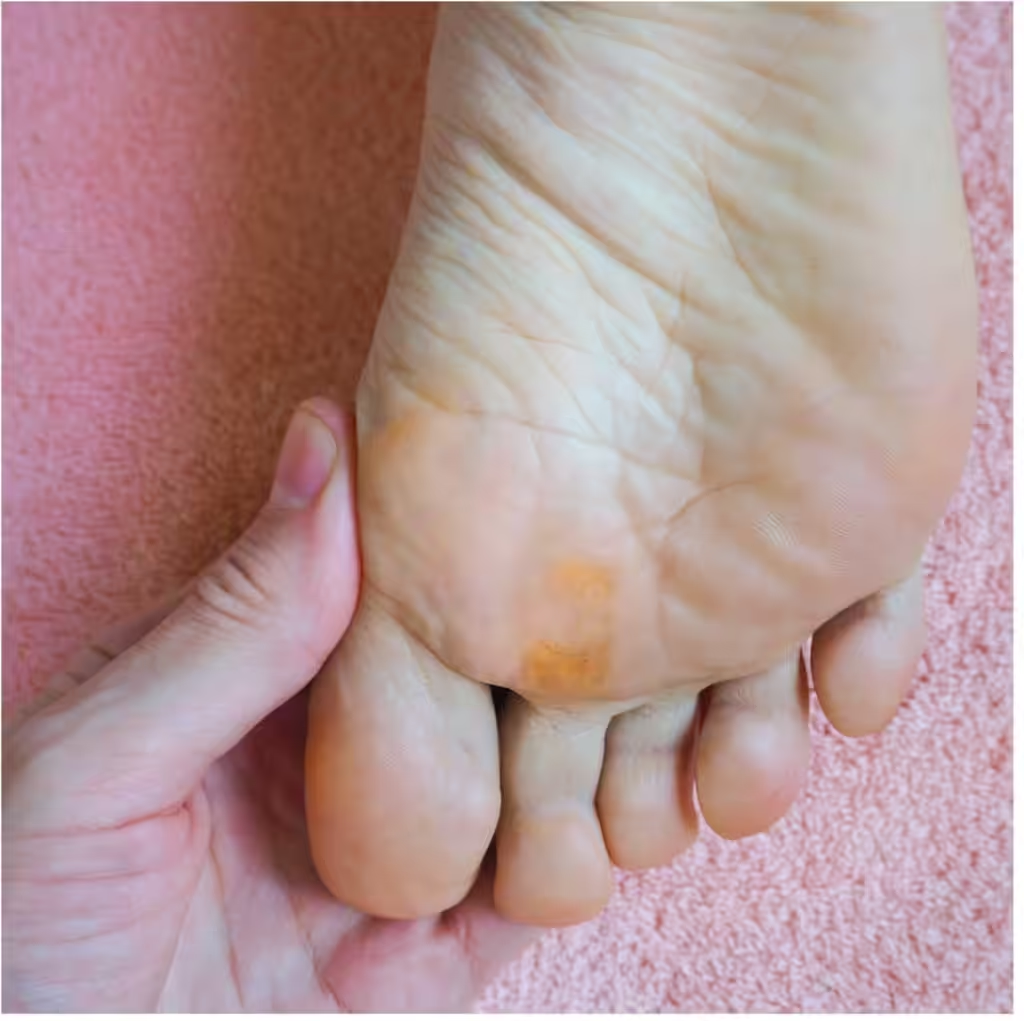
Best Diabetic Podiatrist Near Me?
If you have diabetes or have a diabetic foot callus or corn, it is strongly suggested to see a podiatrist.
At Balance Foot & Ankle Specialists, we are board-certified podiatrists and foot doctors who provide diabetes and diabetic foot care.
We want to be the answer to “Who is the best diabetic podiatrist near me?”
Podiatrist diabetes specialist near me:
See us for a No-Obligation consultation for your diabetic foot evaluation!
Plantar Wart vs Corn vs Callus Treatment Video
![Plantar Warts vs Corns vs Calluses [TOP 20 BEST Home Remedies]](https://www.michiganfootdoctors.com/wp-content/cache/flying-press/61d7de6ce7b7c7d418efe53fe79411a1.jpg)
Podiatrist Callus, Corn & Plantar Wart Treatment Video Summary:
Do you have a Plantar Wart? A Foot Corn, Toe Corn, or Foot Callus?
We go over the TOP 20 BEST Home Remedies & Home Treatments! Learn the difference between plantar warts vs. corns vs. calluses.
Learn the BEST Home Remedies & Home Treatments for your plantar wart removal, foot callus, foot corn, toe callus & toe corn pain! The three most common lesions on the toes or feet are corns on the feet, warts on foot, corns on the toes, and foot calluses. We’ve got you covered with all of these!
Plantar warts can also be known as an HPV wart (human papillomavirus wart), a planters wart, or a plantar verruca. There are different types of warts: flat warts, filiform warts, common warts, periungual warts, and warts on feet.
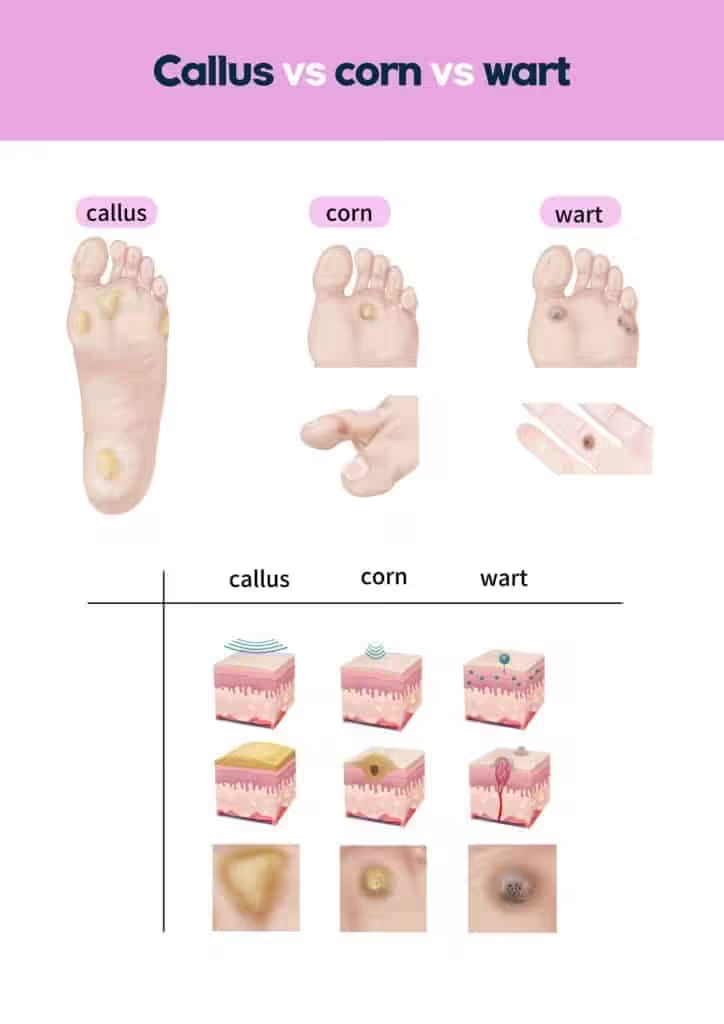
How to Remove a Callus from a Diabetic Foot?
Are you a diabetic having problems with frequent callus formation? Then you are not alone because foot calluses and diabetes are common occurrences. Calluses often occur and grow faster in patients with diabetes, and this is because of high-pressure areas under your feet. If you have too many calluses, you need to see a podiatrist as you may need shoe inserts and therapeutic footwear along with proper foot care.
Calluses are a thick and hardened area of skin developed to protect you from pressure and friction your feet endure, especially if you are frequently on foot.
If callus on diabetic foot is not treated on time, they can become thicker and break down, leading to an open sore or an ulcer. If you try to trim or cut calluses on your own, this can lead to infection and ulceration. Unlike other people, you are at a higher risk because of the poor blood supply and reduced sensation in your feet.
You should avoid removing calluses with chemical agents or medicated patches because they can burn your sensitive skin. Therefore always let a health care professional handle your calluses. A podiatrist is the best medical expert to go to for a callus in a diabetic foot.
Why is a Diabetic Foot at Risk?
Reduced blood flow (poor circulation) is the main reason behind a diabetic foot not fighting infection and healing. Blood vessels in your foot are narrow and harder when you have diabetes. If you are a smoker, this condition can worsen further.
In a diabetic foot, your nerves are damaged because of diabetic neuropathy. Therefore, you may not be able to feel the heat sensation which may lead to easy burns. They can also get burnt with chemicals easily. So people with diabetes can develop non-healing ulcers frequently following calluses. That is why you should be extra careful and need to be followed up with a podiatrist. Chronic ulcers can lead to infection and tissue death (gangrene), and you may end up with an amputation, which is preventable if you seek treatment early.
The risk of developing an ulcer is significantly high in a diabetic foot with a callus.
Callus Formation in the Diabetic Foot – How Does a Callus Develop Easily on a Diabetic Foot?
Peripheral neuropathy is a common complication of diabetes, leading to a lack of sensation. When nerves are damaged, your foot can get deformed, resulting in abnormally persistent pressure on the diabetic foot. When the cells of your foot have to undergo continuous pressure, it keratinizes and becomes hard, turning into a callus. A callus will predispose you to ulceration.
Treatment of a Callus in a Diabetic Foot:
Calluses can be left alone if they do not cause any pain. But, if you have diabetes, calluses have to be treated with special care. You should not attempt callus removal at home without any medical supervision. Usage of unsafe and unsterilized blades can lead to a foot infection. You should not use salicylic acid medicated patches which non-diabetic people commonly use. Salicylic acid may melt and damage your healthy tissue besides the callus leading to infection and tissue death. Therefore calluses must be given special diabetic foot care and treated by a podiatrist, while blood sugar control must be done well by the medical team. Your podiatrist will trim your callus with the utmost care, and they will use sterilized equipment and relieve further pressure on your callus.
Diabetic Foot Callus Removal:
There are several options that your podiatrist may try to remove a callus from a diabetic foot. Which method to use will depend on the size, severity, depth, and the presence of infection in your callus. If your blood sugar level is well under control, your risk of infection will be low, and the procedure will go smoothly without complications.
-
Trim Away Excess Skin of Your Callus
A sterile surgical blade will be used to remove a callus. The excess skin is trimmed gently and methodically because good healthy skin must not be damaged. Hard skin will be peeled off layer by layer until all dead skin layers are trimmed and exposed to live skin. The edges of your callus are smoothed with a pumice stone to enhance your comfort. Trimming will not need any local anesthesia as this procedure causes no pain.
Sometimes your podiatrist will use an electric razor to trim your callus.
-
Total Removal of the Callus
Your podiatrist will use a sterile scalpel to remove ulcerated calluses. Infection underneath your dead skin is taken out. A local anesthetic will be injected to numb the area so that you will not get pain during the procedure. In diabetic patients, the infection risk of a callus is high, especially because they may take time to notice ulcerated calluses. Therefore, callus removal with a scalpel is a common procedure in patients who have diabetes.
Sometimes a cortisone injection may be given to reduce the pain and inflammation in that region after the procedure.
-
Surgical Callus Removal
A callus with deep-seated infection and large deep calluses usually require surgery. Surgical callus removal is also done in patients with advanced or uncontrollable diabetes especially because of their poor blood flow to feet. Callus surgery can be done as an outpatient procedure.
An oral antibiotic course will be prescribed for infected calluses. It can be a precaution to prevent infection in diabetes patients who have to undergo callus removal or any other procedure because they belong to the high-risk group.
Regular follow-up is essential with the podiatrist to ensure proper healing, prevent infection, and prevent new calluses.
-
Callus Removal with Medication
Patches containing 40% salicylic acid, ex: MediPlast, Clear away, can be applied carefully on your callus. This is done for calluses that are not ulcerated and for those which are small. Since you have to replace this patch from time to time, you will have to visit your podiatrist according to a schedule. It would help if you never attempted to use medicated patches yourself because of the risk of damage to normal skin near the callus.
-
Corrective Surgery
If your diabetes is associated with a foot deformity, sometimes surgery will be offered. This will be done to correct the bone alignment that leads to friction so that the development of new calluses will be prevented.
-
Prescription of Custom Made Orthotics
When there is an underlying foot deformity, wearing orthotics will prevent the recurrence of a callus.
After treating the callus, your podiatrist will advise you on preventing new calluses from developing on how to choose properly fitting shoes and how to wear protective coverings like felt pads and bandages to prevent rubbing your sole against the footwear. You should always wear comfortable socks and shoes which fit well and are cushioned to give you adequate support till your callus goes off. Your podiatrist will offer you complete foot care.
Why should you seek help from a podiatrist if you have diabetes?
Thick hard calluses which rub against the ground or shoes can damage or puncture your skin. This is unlikely to happen in those with normal sensations in their feet. The pain they feel would alert them to stop walking to address this issue long before it gets serious. But if you have diabetic neuropathy, you may not feel anything, and it may be too late. The underlying skin of a callus can be punctured and damaged, and infection may set in. You may not even know that this is happening if you do not inspect your feet daily. If this is left untreated, it can lead to an infected diabetic ulcer.
So, if you have diabetes, get your podiatrist to test your circulation and protective sensation regularly. If you have diabetes with poor circulation and neuropathy, regularly get medical attention for your calluses by a podiatrist.
How should a person with diabetes look after their feet while preventing calluses?
- Take care of your diabetes – follow your doctor’s advice regarding your diet and exercises and keep your blood sugar level well controlled.
- Check your feet daily for redness, sores, blisters, calluses, or any other foot problem, especially if your feet’ blood flow is poor.
- Wear well-fitting specially made diabetic footwear with insole cushioning
- Avoid wearing sandals with strips in between toes
- Try to wear covered shoes and slippers. Wear socks that fit your feet well.
- Moisturize your feet well and prevent them from drying. When your feet are hydrated, it will reduce the friction between your feet and shoes.
- Avoid walking barefoot
- Avoid soaking your feet for prolonged periods – However, you can soak your feet in warm water and gently use a pumice stone or emery board to keep your calluses under control.
- Protect your feet from too much heat and cold.
- Use sterilized nail cutters and cut straight across. Use a nail file to smooth the edges. if you cannot do the trimming of nails by yourself, seek help from a podiatrist
- Avoid trimming your calluses by yourself
- Quit smoking if you do because it can worsen the blood flow to your feet.
- If you notice any change in your callus, visit your podiatrist and get proper foot care. It is best to check up with a podiatrist every 2 -3 months, even if you have any foot problems.
References:
Other surgery procedures our podiatrists offer:
- Toenail Fungus Treatment (Oral or Laser)
- Toenail Trimming.
- Orthotics Fitting.
- Ingrown Toenails.
- Infected Ingrown Toenails.
- Podiatrist pedicure or medical pedicure.
- Trimming of Corns, Trimming of Calluses, and Treatment of Pressure Blisters.
- Diabetic Foot Care & Diabetic Foot Wounds.
- Athletes Foot, Dry Skin, Eczema.
- Foot & Ankle Ulcer Care.
- Infection and Abscess Care.
- Staph Infections in the Toe or Foot Treatment.
- Treatment of Plantar Warts for Your Toes and Feet.
- Foot & Ankle Injections (Steroid or Natural Solutions.)
- Management of Foot & Ankle Fractures (Walking Boots for broken toes or broken feet).
- Heel Pain (Heel Spur or Plantar Fasciitis).
- Custom Orthotics for children and adults (In the office).
- Over the Counter Orthotics for children and adults.
- Podiatrist medical pedicure.
- Extra-Depth Shoes for Patients with Diabetes.
- Diabetic Shoes.
- Gout Treatment.
- Prescription (Refills).
- Telehealth appointments.
- Shockwave therapy (AKA ESWT or EPAT therapy)
- Cold laser therapy (In the office).
- MLS laser therapy (Multi-Wave Locked System laser therapy).
- Laser for peripheral neuropathy (In-Office).
- Senior Toenail Cutting & Toenail Trimming Services.
Walk This Way: Trusted Foot & Ankle Information
Learn what’s hurting and how to fix it.
Athlete’s Foot
Ball of Foot
Achilles Tendon
Bunion
Big Toe
Callus
Foot Fungus
Gout
Ingrown
Orthotics
Outside of Foot Pain
Sports Podiatrist
Why Choose Balance Foot & Ankle Specialist in Howell and Bloomfield Hills?
Our experienced podiatric surgeons combine precision, care, and innovation to deliver successful outcomes in flatfoot reconstruction. With modern facilities, patient education, and compassionate care, we’ve become the trusted choice for foot and ankle surgery in Southeast Michigan. We’re committed to restoring your stride—comfortably and confidently.
Book Your Podiatrist Visit Now 
More Podiatrist-Recommended Diabetic Essentials
Diabetic-Approved Walking Shoe
Orthofeet Sprint — seamless, extra-depth, designed for neuropathic feet.
Seamless Diabetic Sock

OS1st FS4 — non-binding, moisture-wicking, protects fragile diabetic skin.
Recovery Slide for Indoor Wear
HOKA Ora 3 — protects diabetic feet from barefoot injury at home.
As an Amazon Associate, Balance Foot & Ankle earns from qualifying purchases. Product recommendations are based on clinical experience; prices and availability shown above update live from Amazon.

When to See a Podiatrist
One unnoticed blister on a neuropathic foot can become a limb-threatening ulcer in under 14 days. Medicare covers diabetic shoes (A5500) and comprehensive foot exams annually for most diabetic patients with neuropathy or circulation concerns. Balance Foot & Ankle runs a dedicated diabetic limb-preservation program — vascular screening, offloading, ulcer care, and shoe fitting — all in one visit. Schedule your annual diabetic foot exam today.
Call Balance Foot & Ankle: (810) 206-1402 · Book online · Offices in Howell & Bloomfield Hills
Frequently Asked Questions: How to Safely Remove a Callus
What causes calluses to form on the feet?
Calluses typically develop due to repeated friction or pressure, often from poorly fitting shoes, walking barefoot, or abnormal foot structure.
Can I remove a callus at home?
Mild calluses can be gently reduced at home using a pumice stone after soaking your feet. However, diabetic or high-risk patients should never attempt self-treatment.
When should I see a podiatrist for a callus?
If the callus is painful, recurring, cracked, or associated with conditions like diabetes or poor circulation, it’s best to seek professional help.
How do podiatrists remove calluses?
At Balance Foot & Ankle Specialist, our podiatrists safely remove calluses using sterile tools and may recommend offloading, custom orthotics, or shoe modifications to prevent recurrence.
Professional callus removal is typically not painful. Our team uses gentle techniques to remove thickened skin without harming healthy tissue.
Can untreated calluses lead to complications?
Yes. Left untreated, calluses can lead to skin breakdown, ulceration, or infection—especially for diabetic patients.
How can I prevent calluses from coming back?
Wear properly fitting shoes, avoid walking barefoot, and consider custom orthotics to redistribute pressure across your feet. Routine checkups with a podiatrist can also help.
Medical References & Sources
- American Diabetes Association — Foot Complications
- PubMed Research — Diabetic Foot Care
- American Podiatric Medical Association — Diabetic Foot

👟 Dr. Tom Also Recommends
Podiatrist Recommended Shoes 2026: Dr. Tom’s Top Picks for Every Condition
The right footwear can make or break your recovery. Dr. Tom’s complete guide to the best shoes for plantar fasciitis, flat feet, neuropathy, bunions & more — with clinical picks for every foot type.
See Dr. Tom’s Top Shoe Picks →Insurance Accepted
BCBS · Medicare · Aetna · Cigna · United Healthcare · HAP · Priority Health · Humana · View All →
Howell Office
3980 E Grand River Ave, Suite 140
Howell, MI 48843
Get Directions →
Bloomfield Hills Office
43700 Woodward Ave, Suite 207
Bloomfield Hills, MI 48302
Get Directions →
Your Board-Certified Podiatrists


Ready to Get Back on Your Feet?
Same-week appointments available at both locations.
Book Your AppointmentIn-Office Treatment at Balance Foot & Ankle
When conservative care isn’t enough, Dr. Tom Biernacki and the team at Balance Foot & Ankle offer advanced, same-day options — including Corn & Callus Treatment Michigan at our Howell and Bloomfield Hills clinics.
Same-day appointments available. Call (810) 206-1402 or book online.
Pros & Cons of Conservative Care for diabetic foot care
Advantages
- ✓ Daily inspection prevents amputation
- ✓ Most insurance covers DME
- ✓ Custom orthotics help
Considerations
- ✗ Daily commitment required
- ✗ Slow wound healing
- ✗ Charcot risk if neuropathy
Dr. Tom’s Recommended Products for diabetic foot care
Affiliate disclosure: As an Amazon Associate, Balance Foot & Ankle earns from qualifying purchases. We only recommend products we use with patients.

Drew Moonwalker Diabetic Shoe Dr. Tom’s Pick
Best for: Medicare-covered diabetic footwear

Diabetic Compression Socks Dr. Tom’s Pick
Best for: Daily protection + circulation


Ready to Get Back on Your Feet?
Same-day appointments in Howell + Bloomfield Twp. Most insurance accepted. Dr. Tom Biernacki, DPM & team.
Book Today — Same-Day Appointments Available
Call Now: (810) 206-1402
About Your Care Team at Balance Foot & Ankle
Dr. Tom Biernacki, DPM · Board-Certified Foot & Ankle Surgeon. Specializes in conservative-first care, minimally invasive bunion surgery, and complex reconstruction.
Dr. Carl Jay, DPM · Accepting new patients. Specializes in sports medicine, athletic injuries, and routine podiatric care.
Dr. Daria Gutkin, DPM, AACFAS · Accepting new patients. Specializes in surgical reconstruction and pediatric podiatry.
Locations: 4330 E Grand River Ave, Howell, MI 48843 · 43494 Woodward Ave Suite 208, Bloomfield Twp, MI 48302
Hours: Mon–Fri 8:00 AM – 5:00 PM · (810) 206-1402
Dr. Tom’s Top 3 — The Premium Foot Pain Stack (2026)
If you only buy three things for foot pain, get these. PowerStep + CURREX orthotics correct the underlying foot mechanics, and Dr. Hoy’s pain gel delivers fast topical relief. This is the exact stack Dr. Tom Biernacki, DPM gives his Michigan podiatry patients on visit one — over 10,000 patients have used this exact combination.
Dr. Tom Biernacki, DPM is a board-certified podiatrist + Amazon Associate. Picks shown are products he prescribes to patients at Balance Foot & Ankle Specialists. We earn a commission on qualifying purchases at no extra cost to you. All products independently tested + reviewed for 30+ days minimum. Last verified: April 28, 2026.

PowerStep Pinnacle MaxxDr. Tom’s #1 Brand
Dr. Tom’s most-prescribed OTC orthotic. Lateral wedge corrects overpronation that causes 90% of foot pain. Deep heel cradle stabilizes the ankle. Built by podiatrists, used by patients worldwide.
- Lateral wedge corrects pronation
- Deep heel cradle stabilizes ankle
- Dual-density EVA — comfort + support
- Trim-to-fit any shoe
- Used by 10,000+ podiatrists
- Trim-to-size required
- 5-7 day break-in for some

CURREX RunProDr. Tom’s #1 Brand
3 arch heights for custom fit (Low/Med/High). Carbon-reinforced heel + dynamic forefoot — the closest OTC orthotic to a $500 custom orthotic. Engineered in Germany.
- 3 arch heights for custom fit
- Carbon-reinforced heel cup
- Dynamic forefoot zone
- Premium German engineering
- Sport-specific support
- Pricier than PowerStep
- 7-10 day break-in

Dr. Hoy’s Natural Pain Relief GelDr. Tom’s #1 Brand
Menthol-based natural pain relief — Dr. Tom’s #1 brand for fast relief without greasy residue. Safe for diabetics + daily use. Cleaner formula than Voltaren or Biofreeze.
- Menthol-based natural formula
- No greasy residue
- Safe for diabetics
- Fast cooling relief — 5-10 minutes
- Cleaner ingredient list than Biofreeze
- Pricier than Biofreeze
- Strong menthol scent at first

Dr. Tom Biernacki, DPM is a double board-certified podiatrist and foot & ankle surgeon at Balance Foot & Ankle Specialists in Southeast Michigan. With over a decade of clinical experience, he specializes in heel pain, bunions, diabetic foot care, sports injuries, and minimally invasive surgery. Dr. Biernacki is a member of the APMA and ACFAS, and his patient education content on MichiganFootDoctors.com and YouTube has reached over one million views.
Frequently Asked Questions
Can a podiatrist help with neuropathy?
What does neuropathy in feet feel like?
Is foot neuropathy reversible?
Recommended Products from Dr. Tom